
Styles & Materials
Cedar vs Vinyl Fence: What Matters on a Colorado Lot
FenceOwl Team · October 11, 2026 · 9 min read
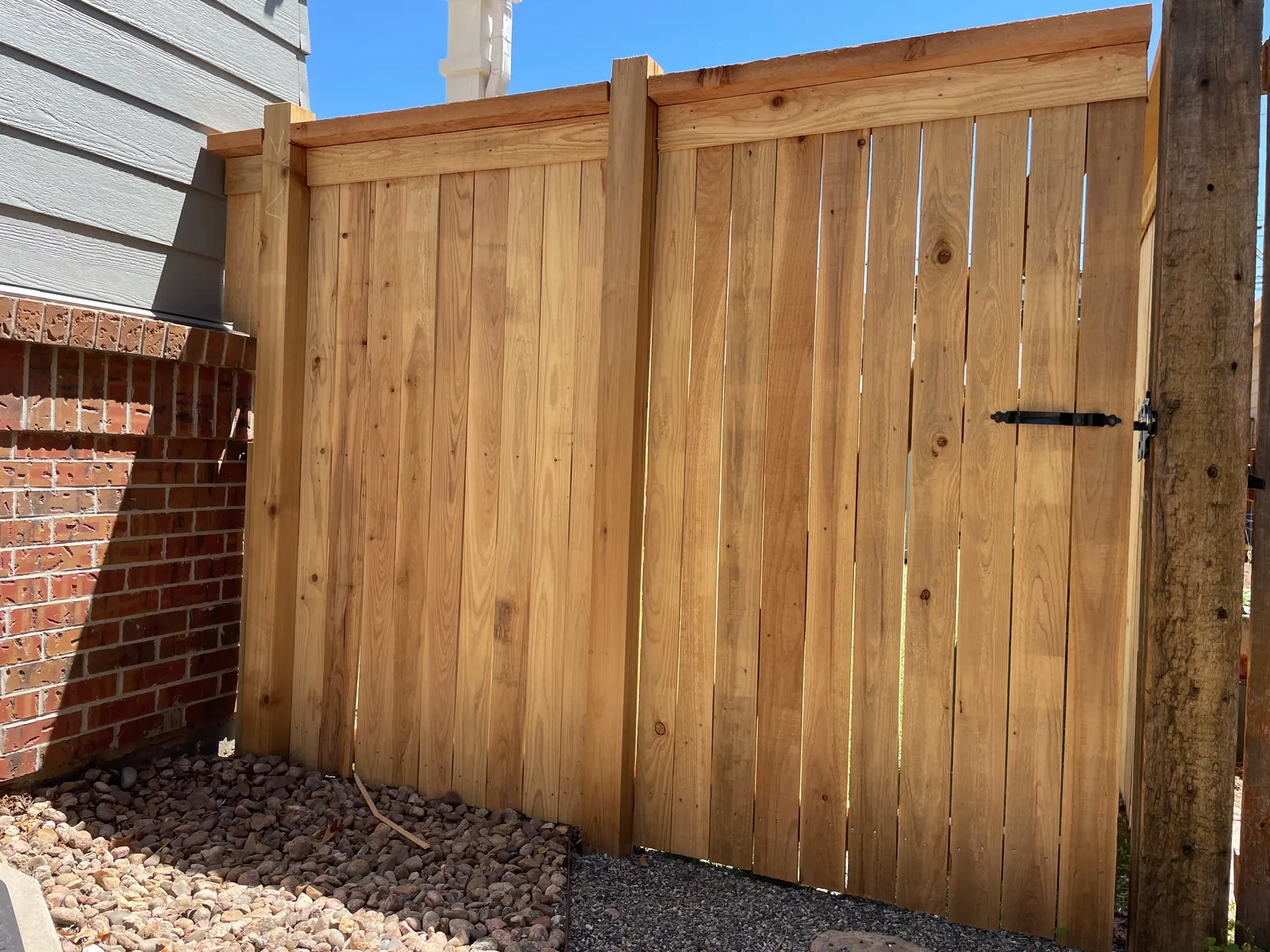
A cedar vs vinyl fence is a choice about the yard in front of you, not a winner you can copy from a neighbor. Cedar is wood that changes color in the sun. Vinyl is a plastic panel you wash. Length, gates, the digging, and the rules still decide the job. The number for your lot shows after you tell FenceOwl where to send it.
What a cedar vs vinyl fence comparison should cover
People search this because they want a privacy fence and they have seen both on the same block. The useful comparison is look, upkeep, weather, and whether the city or an association will allow the material.
Fence estimates in Denver start when you trace your own line. Aurora, Colorado Springs, and Fort Collins use their own permit desks. This article stays on the material.
These are the questions worth answering before you fall in love with a picture:
- Do you want wood grain, or a smooth panel that stays one color
- Who will put a finish on the fence, and how often you are willing to do it
- Whether the boards and the posts are the same problem
- Hail, afternoon sun, and a west-facing run
- A city height rule, a historic district, or an HOA fence approval
None of those is a price. Together they are the decision.
How the two fences look
A craftsman cedar privacy fence is boards, a cap, and a gate built to the opening you have. Cedar dog-ear privacy is the familiar board-and-cap look. Neither one is a spaced wood picket, which lets light through a front yard.
A vinyl privacy fence is a solid panel. Vinyl semi-privacy leaves a gap so the yard still gets light. The color is part of the panel. You do not stain it later to change your mind. If the association wants white, or a tan that matches the trim, a panel that is already that color is the simpler match.
Cedar can go gray, or take a finish so the heartwood stays warmer. The U.S. Forest Service describes western redcedar heartwood as reddish brown to dull brown, with nearly white sapwood, and notes that the wood holds paint well. An unfinished board still weathers. Someone has to keep a finish up if you want the color to stay.
On an older Denver block, a wood side yard is what the alley already looks like. On a newer filing, the fences often match because the covenants said so. Match the block you live on.
Upkeep after the crew leaves
This is the part people mean when they say vinyl is easier. The claim is about work, not about a number.
The Forest Products Laboratory says serious decay needs wood wetter than the fiber saturation point, and that air-dried wood kept dry does not keep decaying. A fence is not a board stored in a garage. Rain, sprinklers, and snow sit on it. A penetrating finish is one way to slow how fast water gets in. The Forest Service also rates western redcedar heartwood among the better softwoods for natural durability against decay and for holding paint. That is a reason people choose it. It is not a promise that an ignored fence stays new.
Vinyl does not have heartwood or sapwood. It does not take a stain. A public product profile in the NIST BEES database, for CertainTeed’s Chesterfield vinyl fence, says no routine maintenance is required to prolong that product’s life, and that cleaning with water and household cleaners is recommended so the fence keeps its look. That is one manufacturer’s product, modeled for a federal database, with a lifetime warranty in that write-up. Another brand’s warranty can read differently. Ask for the sheet that comes with the panels you are buying, and read what it excludes.
Dirt and sprinkler stains land on both. A hose is not a restain weekend, and a restain weekend is not a structural repair.
Heartwood, posts, and the hole in the ground
The board and the post are different pieces of the fence. Mixing them up is how a comparison goes wrong.
The Wood Handbook groups western redcedar with heartwoods rated resistant to decay. It says untreated sapwood of essentially all species has low resistance when conditions favor decay, and that pieces from the same tree can differ. Where decay is a hazard, heartwood in that resistant group generally gives satisfactory service above ground. The handbook says decay resistance may be less in contact with the ground, and it says to be careful using naturally durable woods in ground contact. For more severe decay hazards, pressure treatment is often required. A cedar privacy fence board up in the air is not the same exposure as a post standing in wet soil.
The Forest Service also says this wood is light, moderately soft, and low in strength when used as a beam or a post, with low shock resistance. It is a favored species for fence posts and rails because of durability, and the same publication notes that the butts of western redcedar poles are usually treated with a preservative for extra protection against rot. On a privacy fence, ask what the post is. A cedar board on a post that is wrong for the soil is not “a cedar fence” in the way the brochure means.
Vinyl panels stand on posts too. The plastic does not rot the way sapwood does. The post can still heave or sit in a hole that was too shallow. The visit is where that gets checked. This page will not invent a frost depth.
Before either crew digs, the locate comes first. Colorado 811 says you contact them at least three business days before you dig, for a project of any size. The locate is free. It covers public lines, not a private sprinkler. Build the wait into the week. A Friday hole after a Wednesday call is too soon.
Sun, hail, and a west-facing run
Colorado’s Division of Homeland Security and Emergency Management describes the Front Range as sitting in “Hail Alley,” and it calls the damaging hail season mid-April through mid-September. That page is about roofs, cars, and insurance, not about a fence brand. It is still the weather your fence lives in. Hail can scar a finish, dent a rail, or crack a panel. Neither material is immune because a brochure sounds tough. Read the warranty for storm damage before you treat it as coverage.
A west-facing run gets the afternoon sun and, on many blocks, the hail. Cedar without a finish goes gray there first. Vinyl’s color is in the plastic, so it does not gray the way bare wood does, and it can still show dirt if the product weathers. The Forest Service notes that western redcedar changes dimension only a little as it dries. Movement and color are not the same thing.
Snow sits against the bottom board. A sprinkler that hits the fence every morning keeps that board wet. Point the heads into the grass. That helps either material.
When the rules pick the material for you
A city rule can end the debate before taste does.
Denver’s fences and walls page says that, outside industrial areas, the maximum is four feet in the front yard and six feet in the backyard. Taller fences need a specific approval. Fences over four feet need a zoning permit. A corner lot has to keep the view of traffic clear. Those limits apply to the fence you build, cedar or vinyl.
If the house is an individual landmark or sits in a historic district, Landmark Preservation reviews it. Front-yard fences may not be higher than four feet and must be more than half open. Rear-yard fences may not be higher than six feet and may be solid. Vinyl, PVC, and chain link are not allowed in most historic districts and on most individual landmarks. On those blocks a vinyl privacy fence is the wrong order to place. A wood fence can still be reviewed, and the guidelines still control the look. This page is not a permit.
Other cities write the material list in their own words. Centennial’s fence permit page names vinyl, composite, ornamental metal, masonry, and wood. For wood, it says the fence should be a weather-resistant species, a split-rail design, wood treated with an EPA-approved preservative, or wood that is painted or stained and sealed. A permit there is required for a new fence and for a replacement that changes height, location, or material. Swapping chain link for wood is a different permit question than restaining the fence you have.
An HOA fence approval can be stricter than the city. The covenants may name a color, a height under the city’s maximum, or a material. Get the answer in writing and hand it to the contractor. Many older Denver neighborhoods have no association at all. Do not guess from the house across the alley.
Which yard each one fits
Choose a cedar privacy fence when you want wood, when the block is already wood, or when a historic district has taken vinyl off the table. Plan on the color changing unless someone keeps a finish on it. Ask what the post is, and whether the bottom board will sit in spray or snow.
Choose a vinyl privacy fence when you do not want a stain schedule, and when the covenants already name a panel color. Confirm the city allows it. Read that product’s warranty, including storms and who can repair a panel. A semi-privacy panel fits when you want light and the association still wants vinyl.
Composite boards, including capped products such as Trex, are a third path. They are not vinyl, and they are not a cedar restain. Aluminum and ornamental iron stay open, so they are the wrong tools if the job is hiding the alley. Split rail is the open wood fence for a longer edge, not a side-yard privacy run.
How to get a number for your line
A friend’s fence is a bad model. Theirs may be shorter, already permitted, or sitting on flat ground with an alley. Yours may turn a corner and need two gates.
How an estimate works is the short sequence. You draw the line on a satellite photo, pick the style and a budget tier, and answer a few questions. Tell us where to send it. The price shows then, from a vetted, insured, family-owned contractor. We only work with family-owned American companies. We believe they offer the best service at the best prices.
Get my free estimate. Bring the HOA letter if you have one, and say whether the house is in a historic district. The useful comparison is the one for your posts, your gates, and your block.
Questions homeowners ask
Does this page say whether cedar or vinyl is cheaper?
No. Upfront material, a later finish, gates, and the digging all change the job. FenceOwl shows the number for your line after you tell us where to send it.
Does western red cedar heartwood resist decay?
The Forest Products Laboratory groups western redcedar heartwood with woods rated resistant to decay, and it says that resistance is for heartwood, not sapwood. The same handbook says ground contact is a harder exposure than boards up in the air. A finish and the post choice still matter.
Can I put up a vinyl privacy fence in a Denver historic district?
Denver Landmark Preservation says vinyl, PVC, and chain link are not allowed in most historic districts and on most individual landmarks. Front-yard fences there may not be higher than four feet and must be more than half open. Confirm the district before you order panels.
Do cedar and vinyl both need a utility locate?
Yes. Both sit on posts in the ground. Colorado 811 says you contact them at least three business days before you dig, for a project of any size. The locate is free and covers public lines, not private sprinklers.
City pages
See the number for your yard
Draw the line, pick a style, and tell us where to send it. The price shows on the next step.
Get my free estimate