
Styles & Materials
Trex Fence Pros and Cons for a Colorado Yard
FenceOwl Team · October 19, 2026 · 9 min read
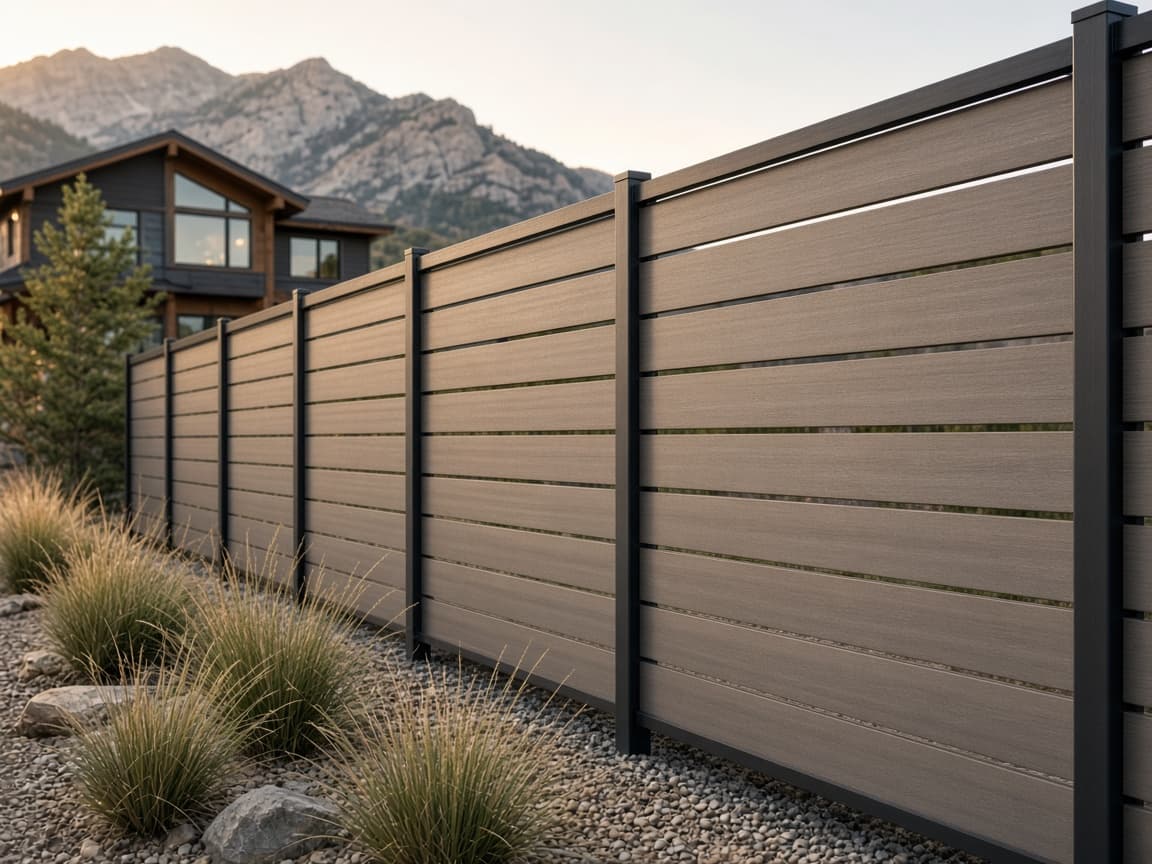
Trex fence pros and cons start with the fence Trex actually sells, not with a rumor from the next block. Trex Seclusions is a composite privacy fence: interlocking pickets, aluminum rails, and a finished face on both sides. The product page pairs that with a claim of no painting, sealing, or staining. The warranty page then lists what that promise does not cover, including a bad install and movement in the ground. This page walks those two documents. It does not name a price. The number for your line shows after you tell FenceOwl where to send it.
Trex fence pros and cons, without a sales sheet
People type this search when they have seen a composite fence and want the trade, not a slogan. The useful questions are the board, the yearly wash, what the warranty refuses, and whether the city or the association will allow the height and the color.
Trex's resources page lists more than one system. Seclusions is the vertical composite privacy fence. Horizons is the horizontal composite fence, with steel post options. Solitudes is another composite privacy fence, drawn up to a shorter maximum than Seclusions. Shenandoah is the rail fence, in two-rail, three-rail, and four-rail layouts. "A Trex fence" is not one object. Ask which system the quote is for before you compare it with the cedar down the street.
The photo on this page is a dark composite run with horizontal boards, square posts, and a gate beside a light house. That is the horizontal look. It is not a claim that the picture is a Trex install, or that every line looks like it. Seclusions is the vertical, interlocking picket. If you want wood grain you can restain, look at craftsman cedar or cedar dog-ear privacy. Composite is the capped-board style.
Fence estimates in Denver start when you trace the line you mean to build. Aurora and Colorado Springs use their own permit desks. The material choice does not move those desks.
What Seclusions is made of
The Seclusions page describes interlocking composite pickets and engineered aluminum rails. It says both sides get the same board-on-board face, so the neighbor does not look at rails and brackets. It says the pickets lock for full privacy. Heights run from 2 feet to 12 feet, on 8-foot centers, and the line adapts to grade. The kit lists 91-inch pickets, a top rail with a shadow-line cap, a bottom rail, a composite post, glass-filled nylon brackets, and an angle adaptor for turns that are not square. Post caps come as crown, pyramid, or flat.
That page says the composite is 95 percent recycled, from reclaimed wood fiber and recycled plastic film, and that LEED credentials are available. It says the fence will not rot, splinter, or attract insects. Those are the manufacturer's statements. Dirt, pollen, and a sprinkler mark are still a cleaning job, and the care page is where that job is written down.
The page says four natural colors and names Woodland Brown, Winchester Grey, and Saddle in the color block we could read. Order a sample if the fourth name matters to your HOA. A screen photo is a poor match for a board in full sun.
The upsides that are actually on the page
The Seclusions page uses the words "zero maintenance" and then explains them as no painting, sealing, or staining. If a cedar quote includes a finish, that sentence is why people look at composite. You are not buying a board you restain to keep the factory color. The fence-care page says the product is made to cut the staining and painting a wood fence asks for.
A cedar privacy fence often shows the pretty side to one yard. Seclusions says both sides get the board-on-board face.
If you put the recycled line in an HOA packet, say what the page says: 95 percent recycled composite, wood fiber and plastic film, LEED credentials available. Do not invent a carbon number the page does not print. Insects and rot are the failure modes the product page is aimed at. Fungal decay and termites are also on the warranty's structural list. Read that as coverage language, not as a forecast for Front Range soil.
Where the Trex fence warranty stops
The warranty page describes a 25-year limited residential warranty. Trex warrants, to the original buyer, that fencing installed and maintained by its written instructions will be free from material defects and will not split, splinter, rot, or suffer structural damage from termites or fungal decay. Excessive fading means more than 5 Delta E units. Permanent staining under normal conditions is on the covered list. The residential warranty may transfer once, within five years of the original purchase.
That is the pro. The same page is the con. It does not cover a condition that comes from improper installation or from skipping Trex's guidelines. It does not cover use outside normal conditions, or a use the guidelines and local codes do not recommend. It does not cover movement, distortion, collapse, or settling of the ground or the supporting structure. It does not cover an act of God. The examples on the page are flooding, hurricane, earthquake, and lightning. It does not cover ordinary weathering inside the fade limit. Deck boards, cladding, fascia, and fasteners sit on other warranties, even if they say Trex on the tag.
Colorado is not a salt-water coast. The page still says that skipping the cleaning guide can void the warranty for salt-air damage, and that the standard galvanized frame on Horizons is not what Trex recommends within about five miles of salt water. On a Front Range lot, the sentence that matters more is the one about the ground. A warranty that excludes settling will not pay you because a post moved. Post depth and concrete are the job.
Claims start with proof of purchase, photos, the install date, and, if they ask, proof you own the property. Keep the contractor invoice. A verbal "it's warranted" does not replace the document.
Fence care is still a chore, just a smaller one
The care page says the fence may still need periodic cleaning. The method it names is a composite deck cleaner, or soap, hot water, and a soft brush. Clean after installation, then twice a year, typically spring and fall.
That is the honest version of "zero maintenance." You are not on a stain schedule. You are on a wash schedule. Mold, the page says, does not feed on the composite itself. Pollen and debris on the face can. Trim what shades the boards and wash before the film builds. If soap fails, the next step on the page is equal parts water and white vinegar, left for an hour, then a rinse. Bleach or acid can lighten the color. Test a hidden spot first, and keep the mix off plants.
Pressure washing feels thorough and the care page does not recommend it. A washer above 1,500 PSI, or held closer than 12 inches, can damage the face and will void the warranty. Sanding voids the warranty too. Rinse with a garden hose.
You can paint or stain a Trex fence. The care page says a coating can last because the board takes up little water. Most people buy the factory color so they do not have to. If an association wants a different color, Trex allows paint after a clean. Do not paint over mildew, and do not pressure-wash the coating.
Colored chalk can be permanent. The care page suggests baby powder or a white marking chalk. Codes require printing on the board edge. Tannin can leach from the wood fiber. The page says to give that at least 12 weeks of weather before you treat it as a stain.
How this sits next to cedar and vinyl
A cedar vs vinyl fence is the other comparison people run. Composite is a third material. Cedar is wood you can restain. Vinyl is a plastic panel you wash. Trex composite, on the manufacturer's pages, is wood fiber and plastic film in a picket that locks, with a factory color and a written limit on fade.
Pick cedar if the association's list is wood only, or if you want a dog-ear or craftsman profile the kit does not make. Pick vinyl if you want a smooth panel and the city and the association allow it. Pick a Trex system if you want that warranty language and you accept the kit: the heights Trex draws, the colors Trex sells, and the guide Trex publishes.
Gates, corners, a slope, and an old fence in the way are the same job on every material. How FenceOwl prices a fence is the sequence: the line, the style, the budget tier, then a contractor who covers that work. The visit is where that contractor says whether the kit fits the grade.
Height, the association, and the dig
A 12-foot option on a product page is not a 12-foot fence you may build. Denver, Aurora, and Colorado Springs each publish their own fence rules. An HOA can be stricter than the city, and it can name colors. HOA fence approval is the packet most Front Range associations want before a post goes in: a drawing, a material, and a height. Bring the Trex color name, not a screenshot.
The install has to follow Trex's guide or the warranty can refuse the claim. Trex publishes guides and shop drawings for each system. Posts on 8-foot centers are a Seclusions dimension. A cedar layout, with its own post spacing, does not transfer.
Before anyone digs, the locate comes first. Colorado 811 says fence posts need a locate, that no dig is too small, and that the locate is free. Contact them at least three business days ahead, not counting the day you call. The ticket marks public gas, electric, water, sewer, and communications. A sprinkler or an invisible dog fence will not show up. Mark those yourself.
Ground that moves is your problem under the warranty, not Trex's. Tell the contractor about a soft spot, a downspout on the line, and any post that already leans. On a slope, ask how the rails will step. Seclusions says the system adapts to grade. The drawing should show that step.
What to settle before the visit
Write down the system name. Seclusions, Horizons, Solitudes, and Shenandoah are different fences. Write down the color from a sample, the height your city and association will sign, and the gates. Note the old fence if one has to come out first.
Ask which warranty document the install follows. A crew can set the posts. They cannot rewrite Trex's exclusions. If the quote says only "composite," ask which line.
Questions homeowners ask
Does this page say what a Trex fence costs?
No. Material, gates, digging, and access all change the job. FenceOwl shows the number for your line after you say where to send it.
Is a Trex fence zero maintenance?
Trex's Seclusions page says no painting, sealing, or staining. The fence-care page still asks for soap, hot water, and a soft brush, often in spring and fall. Pressure washing above the limit on that page can void the warranty.
What does the Trex fence warranty leave out?
Trex's warranty page excludes improper installation, ground movement or settling, and acts of God such as flooding, hurricane, earthquake, and lightning. Ordinary weathering inside the fade limit is not a defect. Read the warranty for your product before you treat a storm as covered.
Can I build the tallest Trex kit my city will see?
Trex lists kit heights. Your city and your HOA set the height you may build. Confirm both before anyone orders boards. A product sheet is not a permit.
Do composite posts still need a utility locate?
Yes. The posts go in the ground. Colorado 811 says you contact them before you dig, including fence posts, and that the locate is free. It marks public lines, not a private sprinkler.
City pages
See the number for your yard
Draw the line, pick a style, and tell us where to send it. The price shows on the next step.
Get a REAL quote for your Denver fence project in seconds.